
The Values on a Clinton County Property Record
Copy every field exactly. On a Clinton County record, the municipality, parcel number, source date, owner, and recording reference only help when they match the source document. Ask the official custodian for deeds and assessments not posted online.
| Value | What It Is | Where |
|---|---|---|
| Assessed value | Roll assessment before tax rates | County Real Property and local assessor |
| Market / appraised value | Market-level estimate based on assessment level | County Real Property and local assessor |
| Last sale price | Recorded consideration, subject to transfer caveats | County Clerk deed and assessment record |
| Land vs improvement | Land and total fields shown separately | County Real Property and local assessor |
Details decide the outcome. Transcribe the municipality, parcel number, source date, owner field, and recording reference word for word before trusting any Clinton County figure, then compare the annual assessment with the newest County Clerk instrument. Ask the official custodian for anything not posted online.
Looking Up a Clinton County Property Value
Begin with the identifiers. A Clinton County parcel number, municipality, source date, owner field, and recording reference anchor every value to its proper record. The custodian can explain records left off the web.
- Find the Clinton County parcel by address and confirm its municipality.]
- Copy the complete tax-map number and the dated owner field.
- Compare the newest deed, grantee, legal description, and recording date.
- Check the correct tax year and map context with the official office.
- Assessed value
- The assessment after applicable exemptions for a taxing purpose.
- Market / appraised value
- A value interpretation using the municipality.s assessment level.
- Level of assessment
- The municipality-wide relationship used for assessment context.
What a Clinton County Assessor Value Is Not
Copy the identifiers exactly. A wrong Clinton County parcel number scrambles the whole match, so the municipality, source date, owner field, and recording reference each deserve a second look. The custodian holds records never posted online.
Value vs price. Use these public records for lawful property research, never harassment, and verify important facts with the custodian.
Separate Three Clinton County Value Numbers
Three different numbers answer three different questions. The total assessment is the figure entered on the roll. A market-level estimate interprets that assessment through the municipality's stated level of assessment. Deed consideration is a transaction clue. It can be nominal, exempt, non-arm's-length, incomplete, or tied to more than one parcel. None is automatically a private appraisal. Each answers a narrower question than what the parcel would fetch on the open market.
Read each field on its own. Land assessment, total assessment, exemption amount or code, and taxable value answer different questions. Taxable value can shift with an exemption change. The total assessment may not move at all.
Use the 2026 Plattsburgh Value Dates
The sample 2026 Plattsburgh City roll sets a July 1, 2025 valuation date and a March 1, 2026 taxable-status date. Its uniform percent of value is 100. At that stated level, the assessment is presented at full value for the roll cycle. A percentage is not a promise. It shows neither what one parcel would sell for nor whether its individual valuation is fair.
Clinton County's 2026 final rolls list 39,482 parcels. Plattsburgh City accounts for 5,127 of them. The counts define roll inventory, not the number of homes, owners, or market sales.
Look Up Land, Total, and Taxable Value
Confirm the municipality first, then locate the right roll year. Copy the parcel number and location. Transcribe the land assessment and the total assessment. Add each exemption entry. Copy each taxable-value column with its heading. Keep school, county, city, and special-district values separate when the roll separates them.
For the official material, use the county's assessment and tax-information page. It routes you to roll and rate documents. The roll you select supplies the parcel-specific values and dates.
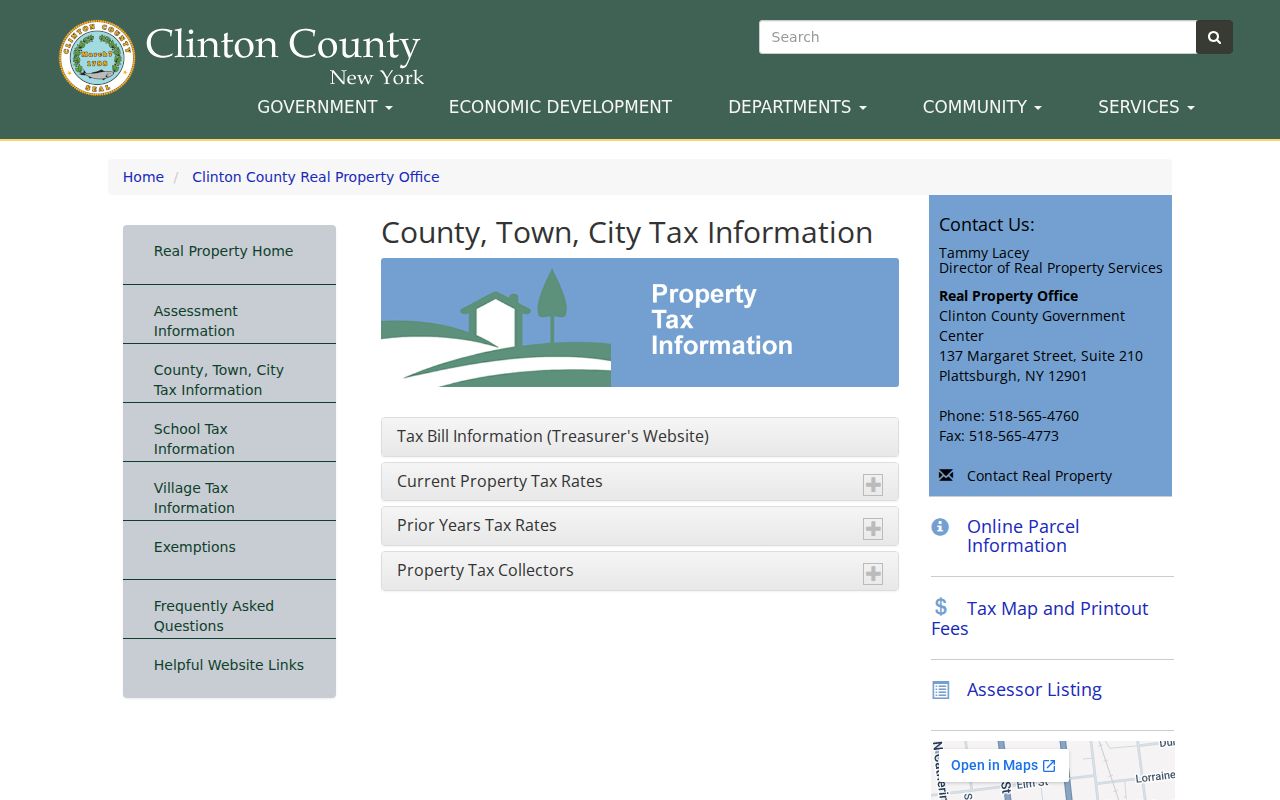
The selected roll carries the parcel-specific values and dates.
Find a Recorded Sale Clue in the Deed
Search Cott for the newest deed and save its recording reference, parties, legal description, and consideration or transfer-tax notation. Match the described parcel to the assessment parcel first. A transfer can involve a partial interest, related parties, an estate, a trust, or multiple parcels.
Clinton County publishes a transfer-tax calculation context, though exemptions and transaction structure still shape the result. A deed price is not an appraisal. Never use it alone to estimate present market value.
Equalization Does Not Decide One Parcel
New York equalization rates relate each municipality's assessed totals to market-level totals. They help apportion taxes across jurisdictions. The level of assessment describes the relationship used within one municipality. Both are broad measures. Neither proves the assessor captured every characteristic of a parcel. Neither validates a comparable sale.
Start with the record. Check its property characteristics, classification, exemptions, and comparable evidence when one assessment looks wrong. The RP-524 grievance process covers the current tentative roll. It follows the local Board of Assessment Review calendar.
Compare Clinton County Rolls Across Years
Hold the municipality, parcel, and field headings constant across every year compared. Note any splits, mergers, exemption changes, revaluation context, or new parcel numbers before calculating a difference. Historic roll links support year-by-year digging. No single official district trend series fits every parcel.
A jump in taxable value can reflect an exemption change rather than a matching shift in total assessment. A new parcel number can reflect mapping or subdivision rather than a sale. Keep the source pages. Keep the dates behind the comparison too.
Know When to Ask an Assessor or Appraiser
Does a roll field, parcel characteristic, exemption, or tentative assessment look wrong? Call the assessor or County Real Property. A formal review goes through the grievance route within its filing calendar. Bill calculations and payments belong to the collector, not the valuation side.
A private appraisal answers a market-value question for a particular purpose and date. Title professionals handle ownership and encumbrances, while surveyors settle boundaries. Clinton County property value records cannot replace those services.