
What the Clinton County Current Owner Record Shows
Copy every detail exactly as printed. That means the municipality, the parcel number, the source date, the owner field, and the recording reference. No corrections or guesses belong in the record. Then place two documents side by side. Use the most recent assessment roll entry and the newest instrument filed with the County Clerk. Where something is missing from the online record, the official custodian can supply it on request.
| Owner of Record | Grantee names on the newest deed |
|---|---|
| Vesting / Tenancy | Exact deed wording controls |
| Mailing Address | Mailing address, which may differ from situs |
| Situs Address | Situs address and parcel identifier |
| Deed Reference | Newest deed located in Cott |
| Ownership Since | Recording date, not assumed closing date |
Accuracy begins with faithful copying. Write down the municipality, parcel number, source date, owner field, and recording reference. Copy them exactly as they appear in the Clinton County record. Small transcription slips can derail a parcel search. Next, compare the annual assessment entry against the newest County Clerk instrument. This shows whether the names agree. If a record is not posted online, ask the official custodian directly.
Confirming the Current Owner in Clinton County
Start by writing the details down untouched. The municipality, parcel number, source date, owner field, and recording reference should be copied letter for letter from the Clinton County document. From there, check the annual assessment record against the newest County Clerk instrument, since the two can name different owners after a recent transfer. Not everything is posted online. The official custodian fills those gaps.
- Find the Clinton County parcel by address and confirm its municipality.]
- Copy the complete tax-map number and the dated owner field. to confirm vesting]
- Compare the newest deed, grantee, legal description, and recording date.
- Check the correct tax year and map context with the official office.
- Owner of record
- The dated assessment-roll owner field.
- Vesting
- Vesting language shown in the deed.
- Registered agent
- The state entity record is a lead, not ownership proof.
Reaching a Clinton County Property Owner
Record the essentials before doing anything else. That includes the municipality and the parcel number. Also copy the source date, the owner field, and the recording reference. Take each one exactly from the Clinton County source. A name that is off by one letter can stall the whole search. Then weigh the annual assessment record against the newest County Clerk instrument. When a record is absent from the online offerings, ask the official custodian for it.
Lawful use. Use these public records for lawful property research, never harassment, and verify important facts with the custodian.
Read the Exact Current Owner Field
On the sample Clinton County roll, the heading reads Current Owner's Name. Report that label together with the printed name. Include the roll year and any source dates tied to the entry. One row can carry a lot more than an owner. Look for Current Owner's Address. Then check property location, the tax-map parcel number, an account number, land and total assessment figures, exemptions, taxable value, and district entries. Many of these confirm the parcel. Only some of them speak to ownership, so keep the purposes straight.
Current Owner's Address is a mailing field, nothing more. It might be a post office box or a second home. It could be a business office or a fiduciary's address. Treat it as where mail goes, never as where the owner lives. The property location field is the situs. That is the field that tells you where the parcel sits.
Measure How Current the Clinton County Roll Is
The 2026 Plattsburgh City roll carries two dates worth knowing. One is a July 1, 2025 valuation date. The other is a March 1, 2026 taxable-status date. A roll published once a year is a snapshot, not a live ownership feed. No official figure exists for the typical lag. It is the wait between a transfer and its appearance on the roll. The honest approach is simple. Name the roll dates, then compare them with the recording date on the newest deed.
A deed recorded after the roll's status date can name a grantee the roll has never heard of. The reverse caution also applies. An indexed document must still be opened and read. Only then do you know it actually conveys the parcel and the interest in question. Neither source can quietly stand in for the other.
Confirm the Current Owner With the Latest Cott Deed
Take the roll owner's name and search it as a grantee in Clinton County's Cott system. The county states that online coverage begins in 1972. Pull the newest deed that plausibly fits. Then compare the grantee, the vesting language, the municipality, any tax-map clue, the legal description, and the recording reference against what the roll shows. Note the recording date as it appears, since it may differ from the closing date.
Open the official Clinton County recorded-document index to begin the grantee search.
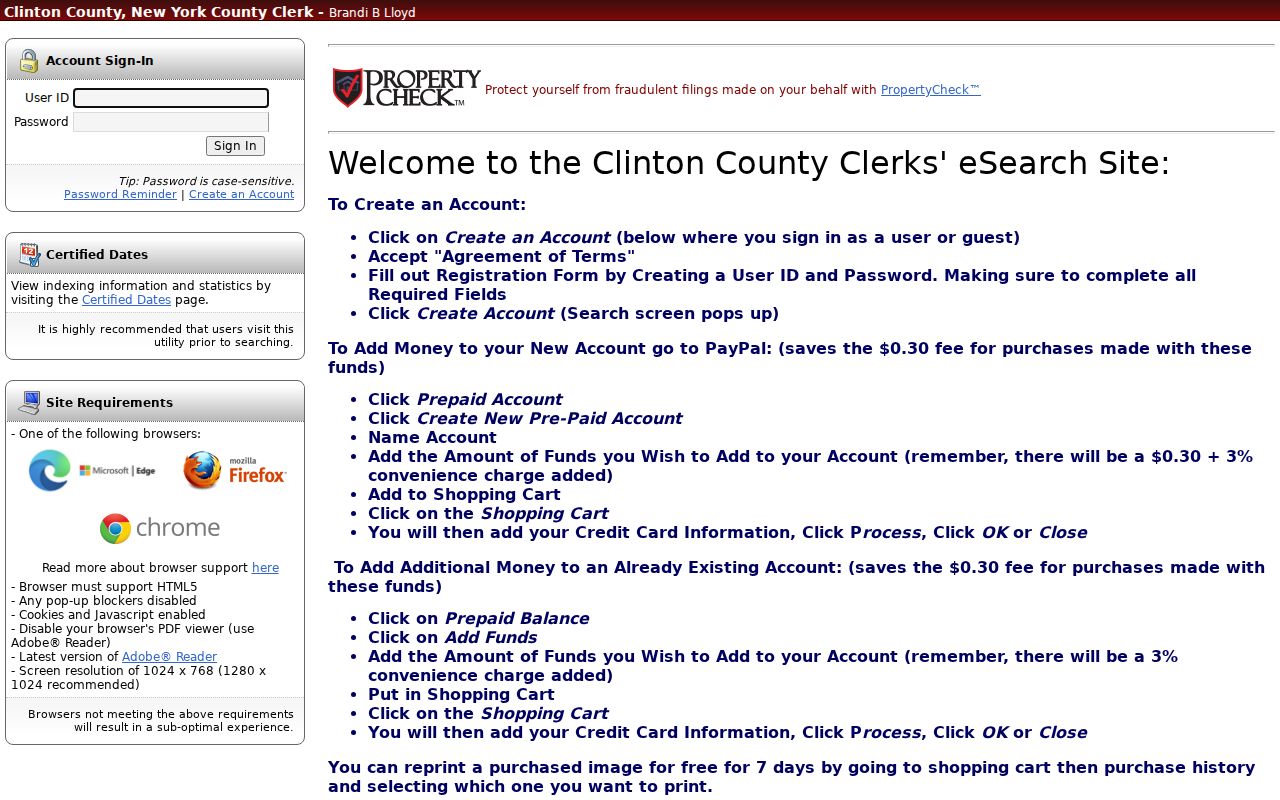
The index only points the way. To describe vesting or the land actually conveyed, you need the deed text itself.
Interpret Trust, Estate, and LLC Owner Names
A roll does not always name a person. It may list a trust, an estate, a limited liability company, a trustee, an executor, or another fiduciary as the owner of record. Copy that name exactly, then run its variants through Cott. The owner may be an entity. The New York Department of State business inquiry can reveal filing history and service details. But an officer or registered agent is not automatically the parcel's owner. The latest deed remains the real evidence. It shows who holds title and how it is vested.
Estates call for two tracks at once. Search both the decedent and the fiduciary in the deed index. Also consult Surrogate's Court on appointment and authority. Probate papers and a death record can explain why a transfer happened. They cannot replace the recorded conveyance itself.
Consult the official New York entity-search instructions once a deed points to an entity owner.
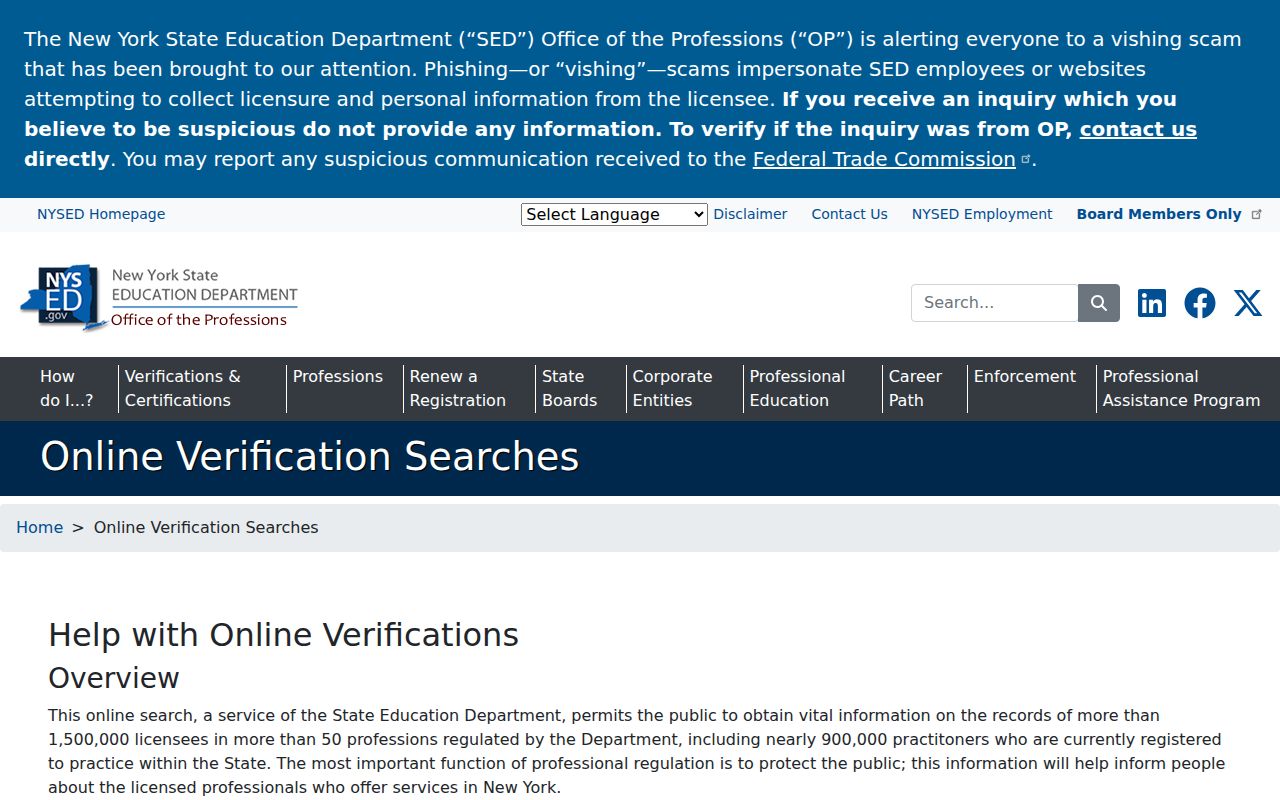
The state verification interface works on names alone. It shows how official lookups are structured, not who owns a parcel.
Resolve City and Town of Plattsburgh Ownership
An address that says Plattsburgh can sit in either the incorporated city or the surrounding town. The postal line will not tell you which. Confirm the municipality through the roll and the GIS map before reaching for assessment, permit, zoning, or tax files. City assessment functions consolidated with County Real Property in 2017. Older city inventories still list assessor cards, rolls, transfer reports, exemption material, and Board of Assessment Review records.
ZIP 12901 describes a delivery area, not a boundary. Report the municipality named in the property record itself. Do not infer it from the ZIP or postal city. This matters for a current-owner lookup. The wrong roll can return nothing at all, or worse, a different parcel entirely.
Use PropertyCheck After Finding the Owner
Clinton County PropertyCheck is a free recording-alert service that runs around the clock. Enter the owner's name exactly as an official document spells it. Then pick text or email delivery. Matching is finicky. Trust suffixes, initials, entity punctuation, and spelling variants can all cause a miss. Verify the indexed name before subscribing.
Keep the tool's limits in view. It is preventive monitoring, not a current-title certification. An alert does not prove fraud, and silence does not prove the title is unchanged. When an unfamiliar notice arrives, review it with the County Clerk. Retrieve the instrument itself.
Request a Current Roll or Card by FOIL
Need a roll entry and the portal will not load? Posted roll PDFs still work. The Clinton County Real Property office can pull the public record for you. Keep the request tight. Give the situs, municipality, tax-map number, roll year, and the owner name if you have one. Then list the fields or card you want. If an exemption might apply, ask for the redacted public portions of the parcel record.
Image Mate hosting and support runs through 2027, so the county-linked system is maintained. Still, public access can hiccup, and undocumented fields are no guarantee. Treat the portal as one route among several. It is not the only path to Clinton County property records.
A Current Owner Result Is Not a Title Opinion
Each record answers one narrow question. The roll owner names who pays the taxes. The latest indexed deed shows who took title. The tax bill confirms the parcel, and the GIS polygon and mailing address fill in location details. None of it reveals an unrecorded claim. It does not settle a boundary dispute or interpret a contested deed. For that, search mortgages, satisfactions, liens, judgments, easements, restrictions, and lis pendens. Look through both the deed records and the court files.
When you present an owner-of-record result, show the evidence with it. Include the dated assessment owner and the newest deed recording date and reference. Note any mismatch you could not resolve. A name with a date and source beats a bare name every time.